Price Tells You Nothing: How to Choose a Maintenance Shop
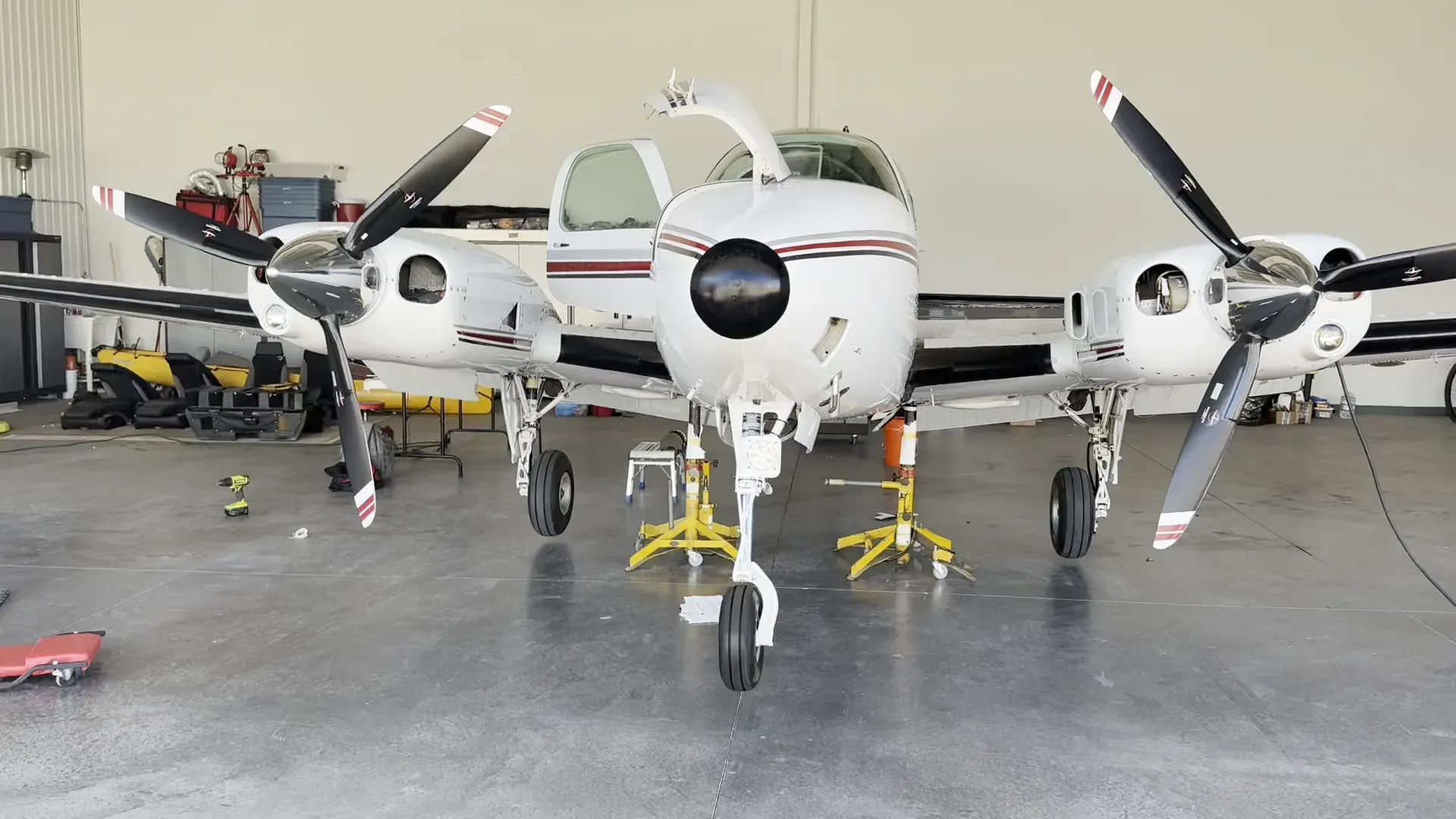
I’ve paid $4,000 for an annual at $130 an hour. I’ve also paid an $8,000 base fee at $170 an hour. Both times, I found problems at pickup. Across those annuals I’ve found squawks left unaddressed, windows safety-wired shut, leaks, and loose fuel injectors. I’ve had to bring the airplane back within hours to have work redone.
As I write this, I’m paying $6,250 for an annual inspection alone. With a moderate squawk list, the airplane has been in the shop for more than three months, and I’ve ended up managing the shop’s schedule myself.
Price told me nothing about quality, in either direction.
In my previous article, Your Airplane Isn’t a Black Box, I made the case for understanding your own airplane: the preventive maintenance you can legally do, the questions to ask, and why you should be there for an annual. That knowledge is what lets you judge a shop. Under 14 CFR §91.403(a), the owner or operator is primarily responsible for keeping the aircraft airworthy. Not the shop. You.
And when you do need a mechanic, choosing the right shop matters just as much as choosing the right mechanic.
So once you get beyond the work you can legally perform yourself, the question becomes: who gets to work on your airplane?
Do not choose a shop based solely on the hourly rate.
Where to start looking
The best references come from people who fly what you fly. Type clubs (the American Bonanza Society, Cirrus Owners and Pilots Association, Cessna Pilots Association, and others) maintain shop lists, run service clinics, and host forums where owners talk candidly about who does good work. Ask other owners of your type on the field. Ask where they go, and where they stopped going.
Look at what kind of airplanes they actually maintain
Start with the most obvious question: what airplanes does this shop normally work on?
If a shop primarily works on Cessna 172s and you own a pressurized twin, that may not be the right shop. If they primarily maintain Pipers and you’ve got a Beechcraft, that deserves a conversation.
That doesn’t mean a good A&P can’t work on something unfamiliar. A qualified mechanic should know how to read a maintenance manual and follow the applicable instructions.
But aircraft have quirks. They develop patterns. There is knowledge that comes only from working on the same type over and over.
The American Bonanza Society’s Landing Gear Repair Guide is a good example. It supplements the Beechcraft maintenance manuals with type-specific knowledge, common wear points, and techniques developed through experience with Beechcraft landing gear. ABS describes it as supplemental information for areas where experience has shown more detail or specific techniques are useful.
That’s what people mean by tribal knowledge. A mechanic who has worked on 100 Barons knows things a mechanic who has worked on two Barons hasn’t had the chance to learn. That’s not a knock on the second mechanic. It’s just reality.
Ask how much experience the shop has with your make, model, and systems.
Look at the shop
Before you leave your airplane there, look around:
- Is the hangar reasonably clean and organized?
- Are parts identified and put away?
- Are tools organized? Do they use tool control systems or shadow boards?
- Are there piles of miscellaneous parts sitting around?
- Are there obvious fluid leaks everywhere?
- Is there trash and FOD on the floor?
- Does the shop look like a place where people know where things are?
A messy shop does not automatically mean bad maintenance, and a spotless shop does not automatically mean good maintenance. But the environment tells you something about the organization’s standards. Aircraft maintenance involves hundreds of small details. A shop that is consistently clean and organized is showing you that details matter to them.
Meet the people actually touching your airplane
Don’t just talk to the owner of the business. Talk to the A&P who will actually work on your airplane:
- How long have you been doing this?
- How much of this type of airplane have you worked on?
- What do you normally see on these airplanes?
- What maintenance manuals do you use?
- What do you use when the manual doesn’t answer the question?
- How do you document your work?
- What happens when you find something unexpected?
You’re looking for competence, but you’re also looking for how they think. Do they seem organized? Do they explain things clearly? Are they comfortable saying, “I don’t know; let me look that up”?
That’s a good answer.
Under §43.13(a), maintenance, preventive maintenance, and alterations must be performed using the methods in the current manufacturer’s maintenance manual or Instructions for Continued Airworthiness, or other methods, techniques, and practices acceptable to the Administrator. The same section requires the tools, equipment, and test apparatus needed to do the work properly.
So ask yourself: do they use the data, or do they work from memory?
A mechanic with decades of experience carries an enormous amount of knowledge in their head, and that is valuable. But good mechanics still open the manual. The smartest person in the room should be willing to verify what they think they know.
What happens when they get interrupted?
This is one of my favorite questions, because it tells you a lot about how a mechanic works.
Aircraft maintenance involves interruptions. The phone rings. Another airplane has a problem. A part arrives. Someone needs help. A customer walks in.
This isn’t just a personal preference. Distraction is one of the “Dirty Dozen,” the human-factors model of maintenance error that the FAA uses in its maintenance safety training. Interrupted tasks are a well-documented way for steps to get skipped.
Now imagine the mechanic has 17 bolts removed from your airplane and gets pulled away for three hours. What happens when they come back?
- Do they have a process for knowing exactly where they left off?
- Do they reference the task and continue from a known point?
- Do they use checklists or work cards?
- Or do they look at the airplane, think “I remember what I was doing,” and start putting things back together?
Those are very different risk profiles. I’d much rather have a mechanic who says, “Let me go back to the procedure and make sure I pick this back up at the right point,” than one who says, “Yeah, I’ve got it.”
Good maintenance is methodical.
The office matters too
You can have a terrific mechanic working inside a terrible organization. That’s a problem. The person running the front office has a huge impact on your experience as an owner.
Ask:
- How do you schedule work and prioritize aircraft?
- How do you communicate when the schedule slips?
- What happens when you miss an estimated completion date?
- How will I receive annual discrepancies? Do I get an itemized squawk list?
- Can I approve discrepancies individually?
- Do you have a customer portal?
- Can I tell you, “Don’t spend more than five hours diagnosing this without calling me”?
And, most importantly: do they actually respect that limit?
Your airplane is not an unlimited credit card, and good shops understand that. A five-hour diagnostic authorization isn’t permission to bill five hours and then call asking for five more. It means someone contacts you before the work goes past the agreed boundary.
That doesn’t mean refusing necessary work because you hit the estimate. If the airplane has an airworthiness issue, you need to deal with it. It means you should know what is happening.
Put those limits in writing on the work order. This protects both sides. In many states, a shop that isn’t paid can place a lien on the aircraft and hold it until the bill is settled. If there’s ever a dispute about what you authorized, you want the answer on paper, not in your memory of a phone call.
Logbooks, records, and insurance
Three housekeeping items before you hand over the keys:
- Logbooks. Never, ever give a shop your original paper logbooks. Give them complete paper or digital copies only. Original logbooks get lost, damaged, and held hostage in billing disputes, and missing logs can take a serious bite out of your airplane’s value. The shop can write its entries on adhesive labels or separate sheets for you to add to your own logs. Make sure the copies are complete and current, because your IA needs the full history, including AD compliance, to do the inspection properly.
- Your own records. Keep your own running record of squawks, expenses, and parts, so you aren’t relying on the shop’s memory or its invoices.
- Insurance. Ask whether the shop carries hangarkeepers liability insurance, which covers damage to your airplane while it’s in their care. Then check what your own policy covers while the airplane is in someone else’s hangar.
Ask about parts
This is worth discussing before the airplane goes into the shop:
- Can I source parts myself?
- Will you install customer-supplied parts?
- Can I order from my preferred vendors?
- Do you mark up parts?
- How do you handle core returns?
- Can you tell me the part number before ordering?
A shop may have perfectly legitimate reasons for not accepting customer-supplied parts. That’s their decision. But you should know their policy before a $2,000 part appears on an invoice.
There is also a difference between a part being available and a part being eligible for installation. Your mechanic has to make sure the part is appropriate for the aircraft and that the work follows the applicable technical data and procedures.
A good conversation before the job starts prevents a bad conversation after the part arrives.
Pay attention to how they handle discrepancies
An annual can be surprisingly stressful, because “annual inspection” and “repair work discovered during the annual” are two different things. The inspection tells you the condition of the airplane. The squawk list tells you what needs to be addressed. You want those clearly separated.
I like an itemized list that tells me, for each item:
- What is wrong?
- Why does it matter?
- Is it an airworthiness item, or a recommendation?
- What does it take to fix?
- What parts are required?
- What’s the estimated labor?
Then I can make an informed decision. A professional shop should be comfortable giving you that information.
Know your rights here, too. If the IA won’t approve the airplane for return to service, §43.11(b) requires them to give you a signed and dated list of the discrepancies. You are not obligated to have that same shop fix them. Any appropriately certificated mechanic can correct the items and return those repairs to service. Most of the time you’ll want the shop that found the problem to fix it, but you should know you have the choice.
Ask how they handle deadlines
Aircraft maintenance schedules are notoriously difficult. A mechanic finds one problem, which uncovers another, and suddenly the airplane that was supposed to be finished Wednesday isn’t coming home until Friday.
Sometimes that’s legitimate. The question is what happens next:
- Do they call you?
- Do they update you before the deadline passes?
- Do they tell you what changed?
- Do they give you a revised estimate?
- Or do you call them Friday afternoon and discover nobody has touched the airplane?
You should know how the shop communicates before you give them the keys. My current annual, now past three months, is exactly the situation good communication is supposed to prevent.
How are you getting the airplane back?
This sounds trivial. It isn’t. Ask what happens when the maintenance is complete:
- Is the airplane washed?
- Is the interior cleaned?
- Are seats and panels put back correctly?
- Are the cowlings properly installed?
- Are tools and rags gone?
- Are oil and hydraulic spills cleaned up?
- Do they perform the required operational checks?
- Does someone walk around the airplane with you and explain what was done?
How the airplane comes back is an excellent indicator of the organization’s overall standards.
One detail is particularly useful: the engine. Part 43, Appendix D(a), requires the person performing an annual or 100-hour inspection to thoroughly clean the aircraft and engine before the inspection. You can’t properly inspect an engine covered in dirt, oil, and grime.
A dirty engine at pickup isn’t proof the shop cut corners. Engines get dirty again during troubleshooting, run-ups, and leak checks. But if an airplane comes out of an annual looking exactly like it went in, including an engine under years of oil and dirt, I’d be asking questions.
Finally, do your own thorough preflight before you leave the field, and treat the first flight after maintenance as a test flight. Problems like the ones I described at the top are much cheaper to find on the ramp than in the air.
You are hiring a maintenance team, not buying a commodity
The cheapest shop is rarely the cheapest shop. But the most expensive shop isn’t automatically the best one, either.
A shop that charges $10 less per hour but takes twice as long is not cheaper.
A shop that replaces parts unnecessarily is not cheaper. A shop that loses track of parts, misses deadlines, and communicates poorly is not cheaper. And a shop that does sloppy work is catastrophically expensive.
Since you can’t use price as a proxy, judge the shop on the things that actually predict good work: competent mechanics, type-specific experience, good procedures, good organization, good communication, and enough business infrastructure to support the work. Then trust, but verify.
You also want a relationship where you can participate. I want my mechanic to tell me when I’m wrong. I want them to show me what they found. I want to understand why something failed, what is normal, and what they are worried about. And I want them to be comfortable with me standing next to the airplane asking questions.
You’re the one strapping in
Ultimately, I am responsible for the airplane I fly. The regulations say so, and so does common sense.
The A&P is responsible for the maintenance they perform and the return-to-service authority they exercise. The IA is responsible for the inspections they perform and approve. But I’m the one who straps into the airplane and launches into the sky.
When you hand someone your airplane, make sure they’re worthy of the trust that comes with it.
Before you hand over the keys: a checklist
The shop and its people
- How many airplanes of my make and model have you maintained?
- Can I meet the A&P and IA who will actually work on my airplane?
- Which maintenance manuals and data do you use, and what do you do when the manual doesn’t answer the question?
- What happens when a mechanic is interrupted mid-task? Do you use work cards or checklists?
- Is the hangar organized, with tool control and parts identified?
Scope and cost
- Is a not-to-exceed limit written on the work order?
- Will you call me before going past that limit?
- Will I get an itemized squawk list that separates airworthiness items from recommendations?
- Can I approve discrepancies individually?
- Can I supply my own parts? Do you mark up parts? How are cores handled?
Participation
- Do you offer an owner-assisted annual?
- What can I remove, and what will you put back together?
Schedule and communication
- How will you tell me when the schedule slips, and when?
- Is there a customer portal or a regular update?
Paperwork and protection
- Am I keeping my original logbooks and giving the shop copies only?
- Am I tracking squawks, expenses, and parts myself?
- Do you carry hangarkeepers insurance? What does my own policy cover?
Pickup
- Is the airplane cleaned, inside and out, with panels and cowlings secured?
- Were operational checks completed?
- Will someone walk me through what was done?
- Have I done my own thorough preflight before leaving the field?
David Stites, MEI
Multi-engine flight instructor and professional ferry pilot in the San Francisco Bay Area.
Ready to Start Your Multi-Engine Training?
Contact me today to discuss your training goals and schedule your first lesson.
Get in Touch