Your Airplane Isn't a Black Box
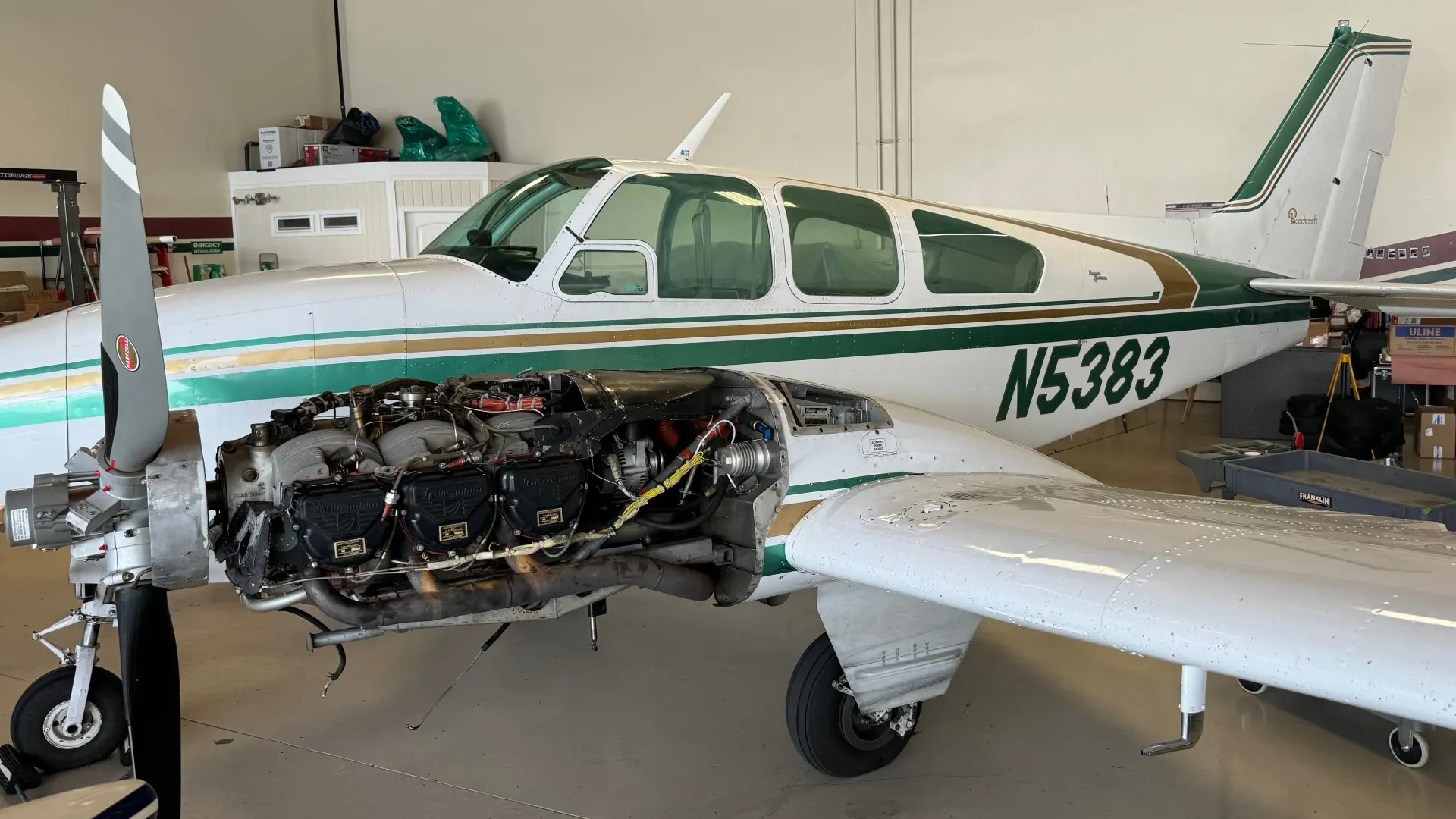
Two things make aircraft ownership much less painful: understanding your airplane and having a good mechanic.
Most owners spend a lot of time thinking about the second one and not nearly enough about the first.
Aircraft maintenance is expensive. That is not a secret. What is surprising is how much of that expense comes from work an owner can legally perform, work an owner can help with, or work an owner could understand well enough to make better decisions about.
You do not need to become an A&P to understand aircraft maintenance. You should, however, become a knowledgeable aircraft owner. The regulations already assume you will be: under 14 CFR §91.403(a), the owner or operator is primarily responsible for maintaining the aircraft in an airworthy condition. Not the shop. You.
That understanding is also what lets you judge the people who work on your airplane, which is the subject of a separate article.
Start by getting your hands dirty
Part 43 gives certificated pilots an important privilege. Under §43.3(g), the holder of a pilot certificate may perform preventive maintenance on an aircraft they own or operate, as long as the aircraft is not operated under Parts 121, 129, or 135. Under §43.7(f), a pilot holding at least a private pilot certificate may then approve the aircraft for return to service after that work. A student pilot can’t sign off their own preventive maintenance.
The important word is preventive.
Part 43, Appendix A(c), lists the tasks that qualify. They include:
- Removing, installing, and repairing landing-gear tires
- Servicing wheel bearings
- Servicing landing-gear struts
- Replacing safety wiring and cotter keys
- Lubrication that does not require disassembly
- Replacing spark plugs
- Replacing certain hose connections and prefabricated fuel lines
- Cleaning or replacing fuel and oil strainers or filter elements
- Servicing batteries
There are a number of other relatively simple tasks on the list. None of the work can involve complex assembly operations.
Oil changes are probably the most common owner-performed preventive maintenance. They are widely treated as preventive maintenance when done properly, and they tie directly to the Appendix A item on cleaning or replacing oil filter elements.
Brakes are a gray area. Tires are specifically listed in Appendix A; brake linings are not. Many owners replace their own linings and consider it preventive maintenance, and you’ll get different answers depending on who you ask. Since it isn’t explicitly on the list, my advice is to do brake work under an A&P’s supervision and let them sign it off.
That distinction matters. Part 43 does not mean “anything a reasonably handy person can do.” It means specific work the regulations permit.
Whatever you do, document it. Under §43.9, a maintenance record entry must include:
- A description of the work performed
- The date the work was completed
- The name of the person who performed the work
- If the work is approved for return to service, the signature, certificate number, and kind of certificate held by the person approving it
The signature is what approves that work for return to service.
Log the maintenance, not the story
There’s a second half to “document it”: record the maintenance, not everything you did.
A logbook entry is a permanent legal record that follows the airplane for the rest of its life. §43.9 asks for a description of the work performed. It doesn’t ask for a narrative of how you got there, what you looked at along the way, or what you were thinking. Owners get into trouble with entries that say too much.
The most common version I see is logging a check that didn’t result in any maintenance: “Checked fluid levels, all within limits, no action taken.” Nothing on the airplane changed. A routine check that finds everything normal and changes nothing isn’t a maintenance action, so there’s nothing to log.
The distinction matters when the inspection itself is the requirement. A recurring AD, an annual, or a 100-hour inspection is the maintenance action, so you log it: “Complied with AD 20XX-XX-XX paragraph (g) by inspection. No defects found. Next inspection due at 2,450.0 tach.” Under §91.417, AD records need the method of compliance and, for recurring ADs, when the next action is due.
Compare two entries for the same oil change. The first one records the maintenance:
Changed engine oil and filter in accordance with the aircraft maintenance manual. Oil filter cut and inspected; no metal found.
The second one tells a story:
Drained oil, which looked darker than last time. Filter had what might be a few small flakes, probably carbon. Noticed a slight seep at the #3 rocker cover, will keep an eye on it. Refilled with new oil and filter. Engine ran fine on the run-up.
Every sentence in the second entry beyond the work performed creates a question someone will ask later. Flakes of what? Was the seep ever fixed? A buyer’s prebuy inspector, your insurance company, or an FAA inspector will read “will keep an eye on it” as an open discrepancy that nobody resolved.
None of this is about hiding anything. If you find something, it has to be dealt with: if you think you found metal in the filter, that’s a reason to call your mechanic, not a sentence in the logbook. The entry itself should state what was done, accurately and completely, and nothing more.
Learn everything else you can
The preventive-maintenance list is only a small part of what an aircraft owner should understand.
You should be asking your mechanic questions:
- Why is that safety wire installed that way?
- Why does this panel have to come off to get to that component?
- What does this actuator actually do?
- Why is that bearing replaced instead of lubricated?
- What does a normal spark plug look like on this engine?
- Is that amount of oil staining normal for this particular engine?
- How much play is normal in this control?
- Where does this hydraulic fluid actually go?
You are learning the airplane.
Find a shop and an A&P willing to teach you. Some mechanics will tell you to stay out of the way. Others will let you stand there, ask questions, hold the flashlight, help with appropriate tasks under supervision, and explain why they’re doing what they’re doing. Those are the mechanics you want to learn from.
The regulations support this. Under §43.3(d), a person working under the supervision of a certificated mechanic may perform maintenance that the mechanic is authorized to perform. Supervision has a real meaning here: the mechanic must personally observe the work closely enough to make sure it’s done properly, and must be readily available, in person, for consultation. “The A&P is somewhere on the field” is not supervision.
My advice is simple: get involved. Help remove panels, cowlings, seats, and interiors during an annual. Ask to watch. You can’t perform the required inspection itself, but there is plenty you can do around it, and every hour you spend there teaches you something about your airplane.
Participate in an annual at least once
If you own an airplane and have never been present for an annual inspection, make it a priority. Many shops offer an “owner-assisted annual” by that name, so ask for it.
There is a difference between being told your airplane has a landing-gear system and standing underneath it while someone shows you how the system works.
There is a difference between knowing you have a fuel system and seeing every line, fitting, valve, vent, and connection.
There is a difference between knowing your engine has a magneto inspection requirement and watching the mechanic remove, inspect, and reinstall the components.
An annual lets you see the airplane in a condition you will almost never see during normal flying.
More importantly, you start to establish a baseline:
- This is what my landing gear looks like when everything is healthy.
- This is what normal wear looks like.
- This is where this engine normally seeps a little oil.
- This is what this particular airplane sounds like.
- This is how much play is normally in this component.
That knowledge becomes incredibly useful later. The next time something changes, you are much more likely to notice.
It can save you a lot of money
This is the least glamorous reason to learn aircraft maintenance, but it matters. Understanding your airplane protects your wallet.
When a mechanic gives you a discrepancy, you should understand enough to ask intelligent questions:
- What actually failed?
- Can it be repaired, or does it need to be replaced?
- Is the part still available?
- Is there an approved replacement?
- How many hours of labor does this normally take?
- Does getting to the failed part require removing half the airplane?
- Is there another discrepancy we can handle while everything is already apart?
There is also a useful distinction between doing the work yourself and reducing the shop’s labor burden. Owning the airplane doesn’t give you blanket authority to maintain it. But under appropriate supervision, there is maintenance you may be able to help with. Even when you can’t legally perform a task, removing access panels, interiors, cowlings, and other non-technical items can reduce the time your mechanic spends on them.
Coordinate that with the mechanic before you start taking things apart.
When the part doesn’t exist anymore
Parts availability is a real problem for older airplanes. Sometimes the answer to “Is the part still available?” is no, and there’s no approved replacement either. Two options are worth knowing about.
Owner-produced parts. Under §21.9(a)(5), a part produced by an owner or operator for maintaining or altering their own aircraft is eligible for installation. You don’t have to make it in your garage. You can hire a machine shop to fabricate it, as long as you participate in its production. The FAA’s guidance, based on a 1993 legal interpretation and referenced in AC 20-62E, describes five ways an owner can participate:
- Providing the design or performance data, including an original part to duplicate
- Providing the materials
- Providing the fabrication processes or assembly methods
- Providing the quality control procedures
- Personally supervising the manufacture
There are limits. The part is for your own aircraft; you can’t produce them to sell. It has to conform to FAA-approved data, and looking like the original isn’t enough. And your mechanic still has to determine that it’s airworthy, install it, and approve the airplane for return to service.
VARMA. The FAA’s Vintage Aircraft Replacement and Modification Article program applies to aircraft under 12,500 pounds that were type-certificated before 1980. That’s the date of the type certificate, not the date your airplane was built. It lets maintenance personnel substantiate substitute parts, including some off-the-shelf parts, without a full engineering approval, but only for low-risk parts whose failure would not prevent continued safe flight and landing. It’s meant for parts that are obsolete, out of production, or unobtainable. It isn’t a way around buying a part that’s merely expensive.
Both options depend on a mechanic who is willing to work with them. Have that conversation before you start a parts project, not after.
”You can take it apart, but you can’t put it back together”
You’ll hear this one around the hangar. It’s a useful caution, but it isn’t a rule. There is no sentence in Part 43 that says it.
What actually matters is:
- Who is performing the work
- Whether it is preventive maintenance
- Whether supervision is being provided where required
- Who is authorized to approve the work for return to service
In an annual, you can absolutely participate in appropriate tasks. The inspection itself belongs to the IA.
The practical rule is simpler: agree with your mechanic in advance on what you are going to remove, what you are going to work on, and what they expect to put back together. That prevents a much bigger problem later.
You’re the one strapping in
Ultimately, I am responsible for the airplane I fly. The regulations say so, and so does common sense. The A&P is responsible for the maintenance they perform. The IA is responsible for the inspections they approve. But I’m the one who straps into the airplane and launches into the sky.
The more I understand about the machine underneath me, the better pilot and aircraft owner I become.
Once you understand the airplane, the next question is who gets to work on it. That’s the subject of my next article, Price Tells You Nothing: How to Choose a Maintenance Shop.
David Stites, MEI
Multi-engine flight instructor and professional ferry pilot in the San Francisco Bay Area.
Ready to Start Your Multi-Engine Training?
Contact me today to discuss your training goals and schedule your first lesson.
Get in Touch